Hello. If you run a small business or work as a freelancer, you already know that showing up on Instagram consistently is easier said than done. Between client work, admin and everything else, finding time to post every day feels impossible. The good news is that with the right rhythm and a bit of planning, you do not need to post constantly to grow. You just need to post smartly. Here is what actually works in 2026.
Why Scheduling Still Matters (More Than Ever)
Instagram has 2 billion daily active users, according to Meta (July 2026). Standing out takes more than posting whenever inspiration strikes. The 2026 algorithm predicts what each person will do with your post (like it, comment on it, send it to a friend, watch it to the end) and reads those reactions as a rate per person reached.
Scheduling lets you control exactly when your content goes live, so it hits your audience when they are actually scrolling. It is a real advantage, even if no time slot can save a weak post.
How Often Should You Actually Post?
This is the question everyone asks, and the honest answer is that no recent study sets a number. Adam Mosseri's advice is to post as much as you can at a pace you can keep (September 2026), and to add Stories almost every day. Too little, and your community may forget you between posts. Too much, and you risk spreading their attention thin.
For most artisans, freelancers and small shops, a realistic and effective weekly rhythm looks like this:
- 2 Reels per week, to test in the evening, when people have time to watch
- 1 carousel per week, ideally at lunchtime, because carousels drive saves, and saves count
- Stories almost every day, because they keep your existing followers warm and coming back
If that still sounds like a lot, start with 2 Reels and 1 carousel per week. That alone is already an excellent base. Quality of watch time beats raw posting frequency, every time.
Finding Your Best Times to Post
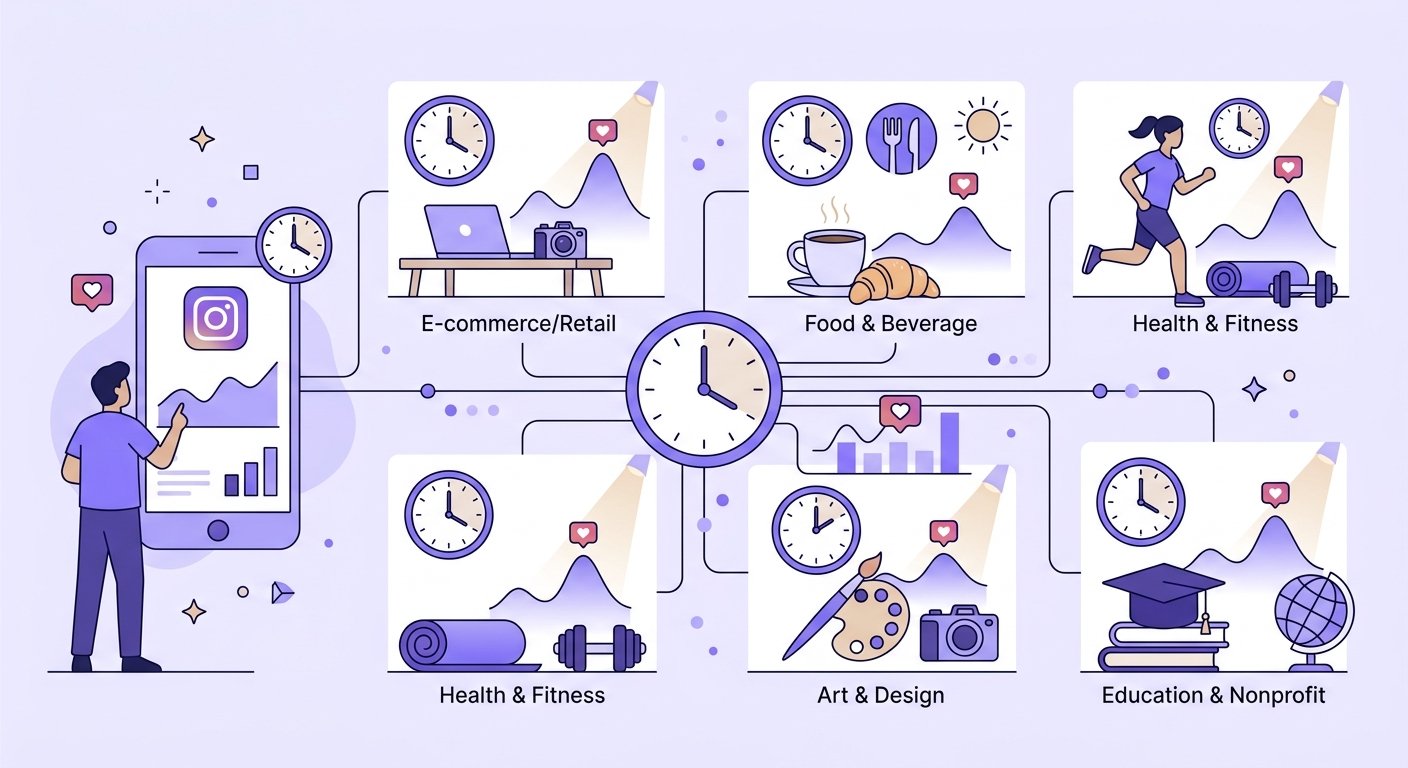
No study based on 2026 data gives a best time to post, and none covers France. The timing studies published this year rely on older data, and their recommendations are up to thirteen hours apart. The most reliable approach is to check in your statistics when your audience is online. Only one pattern holds across studies: midweek works better than the weekend.
Here is what you can test, format by format:
- Reels: publish 30 to 60 minutes before your audience peak. If your followers are most active at 8pm, publish around 7pm. This gives your Reel time to collect its first reactions before most of your audience logs on.
- Carousels: try lunchtime slots, when people have a few minutes to swipe through content.
- Stories: mornings, when people check their phones before starting the day.
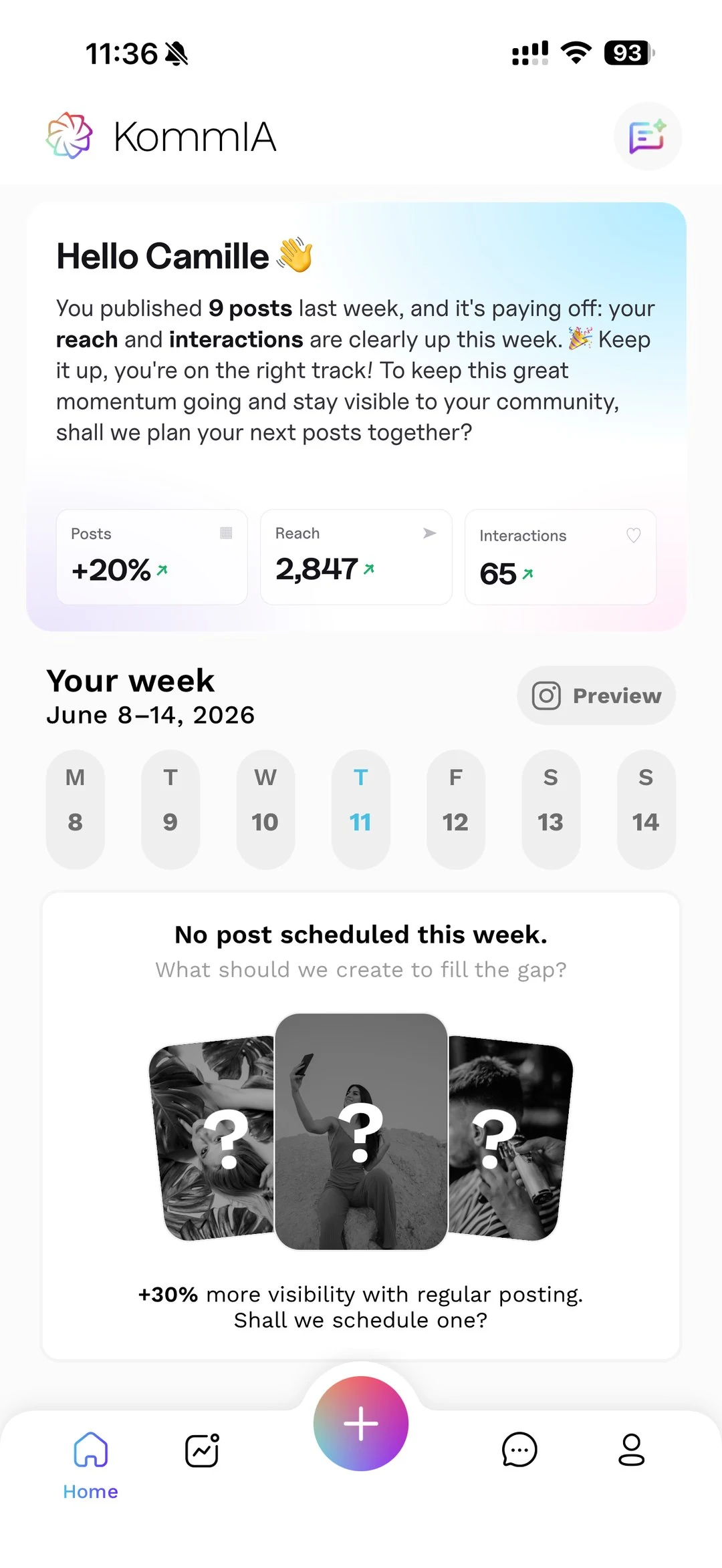
That is a lot of time slots to keep track of manually. This is exactly where KommIA helps: it publishes your posts automatically at the time you pick, so you do not have to watch the clock or set reminders for every piece of content.
What the Algorithm Actually Rewards in 2026
Instagram predicts what each person will do with your post and reads those reactions as a rate per person reached. Here is what it genuinely looks at:
- Watch time and completion rate: for Reels especially, a video watched to the end sends a very strong signal. Hook people from the very first seconds.
- Likes and DM sends: likes weigh most with your followers, sends with people who do not follow you yet (Adam Mosseri, May 2026). Saves and comments count too, and carousels with useful, practical content get saved constantly.
- Relationship signals: Instagram favours accounts the user already interacts with, so nurturing your existing followers through Stories and replies builds long-term reach.
- Authenticity: favour first-hand, genuine content over overly polished, generic material.
One more thing worth knowing: Instagram limits you to 5 hashtags maximum per post or Reel. That count includes the caption and the comments, and any extra hashtags are rejected. Use 3 to 5 precise, relevant hashtags, and invest more effort in writing descriptive captions with natural keywords. Instagram SEO now matters more than hashtag volume.
Trial Reels: Test Before You Publish
If you are nervous about experimenting with new formats, Instagram offers a feature called Trial Reels. If your account has access, it lets you test a Reel with people who do not follow you before publishing it to your account. For a small business trying new content styles, it removes a lot of the risk.
Combine that with a tool like KommIA, which handles the scheduling side automatically and suggests optimal posting times based on your audience, and you have a genuinely manageable content workflow. No more guessing, no more panic-posting at midnight. You can see how affordable it is to get that level of automation working for your account.
The reality is simple: consistent, well-timed posts at a steady rhythm you can keep will outperform chaotic daily posting every single time. Plan once a week, let the tool publish for you, and spend the rest of your energy on the actual work that pays your bills.