Hello, if you have ever posted something you were really proud of and watched it get almost no engagement, chances are the timing was off. Instagram ranks posts by predicting how each person will react, and recency weighs heavily in that ranking (Adam Mosseri, September 2026), so the hour you choose matters more than most people realise. This guide shows you how to find your own window, sector by sector, so you can stop guessing and start getting results.
Why Timing Still Matters on Instagram in 2026
Instagram's feed is not purely chronological, but recency still weighs in its recommendations: according to Meta (July 2026), more than half of the content recommended in the Instagram feed is less than a day old. So if you post in the middle of the night while your audience sleeps, that critical window goes to waste.
On top of that, Instagram Reels and posts are judged on the same reactions: Adam Mosseri, head of Instagram, explained in May 2026 that Instagram looks at watch time, likes and DM sends, always as a rate per person reached. Sends weigh most for reaching people who do not follow you, likes weigh most with your followers, and posting at the right time gives that first circle of engagement the best chance to kick in quickly. For a freelancer or small business with limited time and no big ad budget, that early momentum is everything.
Where to Start, Industry by Industry
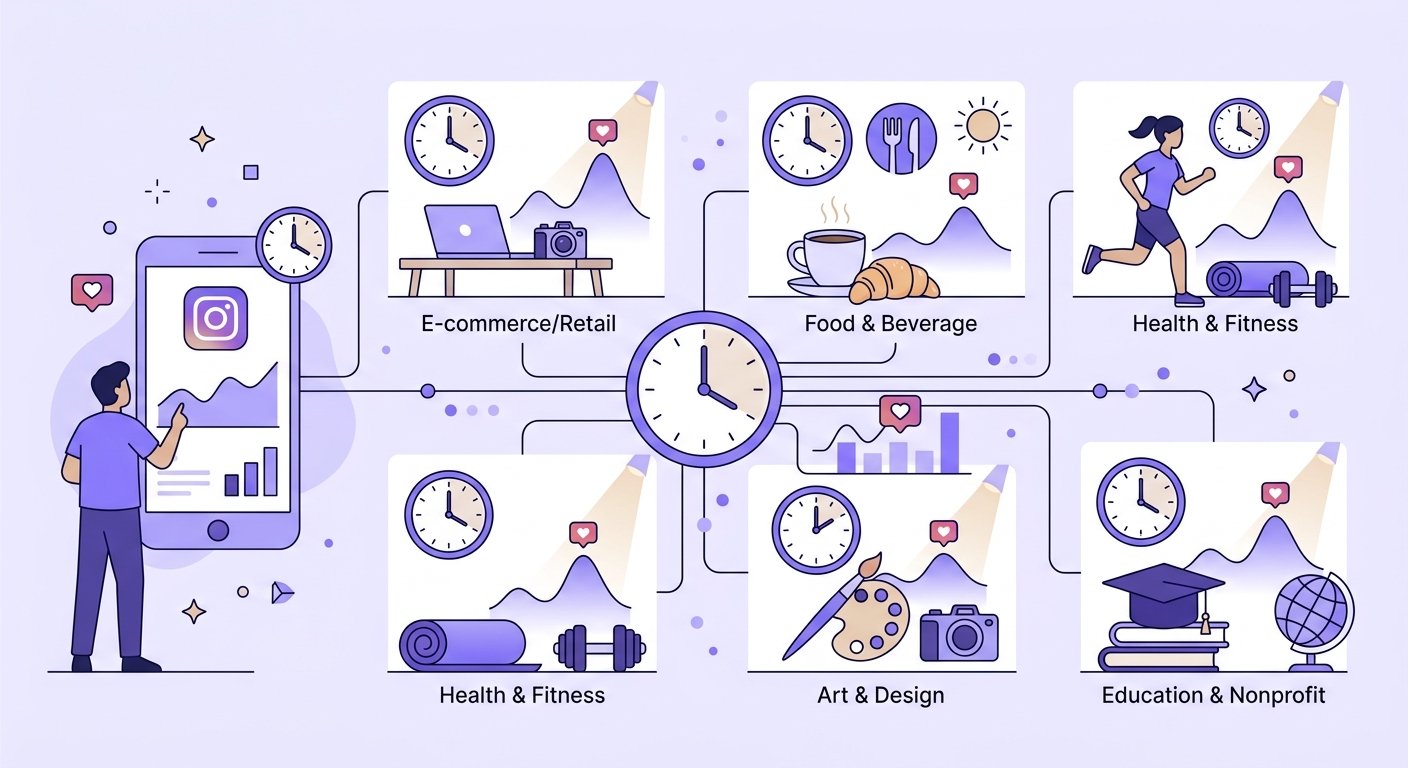
No study based on 2026 data gives a best time to post: the timing studies published this year rely on older data, and their best slots are up to thirteen hours apart. Metricool also points out that most views arrive in the three days after posting, which puts the exact hour in perspective. Treat the windows below as starting points to test, then compare in your statistics. All times are local to your audience.
Food, Restaurants and Cafés
People browse food content when they are hungry or planning their next meal. No recent study gives a slot specific to food businesses, but one lead stands out: post just before meals. Posting an appetising photo or a Reel at 11:15 puts you in people's minds before they decide where to have lunch, and you can also test early evening, when people think about dinner.
Fashion, Beauty and Handmade Goods
For artisans selling jewellery, clothing or beauty products, two windows are worth trying first: the weekday lunch break, when your customers have a moment to scroll, and the early evening after work. Do not rule out the weekend either: test it too and compare in your statistics.
Fitness, Wellness and Health Coaches
This community often trains early, but public studies give no reliable slot for this sector. Try posting early on weekday mornings for a few weeks. Test the weekend too, when your followers have more time to train and look for motivation, then keep the slots that work in your statistics.
Home Décor, Interior Design and Renovation
Décor inspiration fits the weekend, when people have time to plan projects. Test Saturday and Sunday mornings, and during the week try Thursday evenings, when weekend projects start taking shape. Then check in your statistics which slots get your carousels the most saves.
Freelancers: Photographers, Designers, Consultants
Your potential clients are professionals who check Instagram during breaks. With no recent study on this sector, start from logic: test mid-morning first, in the middle of the week. Evenings and weekends suit B2B less, since decision-makers are less likely to engage with work-related content on Saturday or Sunday, but check it in your statistics.
How to Find Your Own Best Time (Without Spending Hours on It)
The windows above are only starting points to test, and your specific audience might behave differently. Here is a simple process that only takes a few minutes a week.
- Go to your Instagram Insights, tap 'Total followers', then scroll to 'Most active times'. Note the daily windows when your followers are most active.
- Post consistently at those times for a few weeks, then compare reach and engagement per post.
- Adjust one variable at a time, either the day or the hour, not both at once, so you can actually read the results.
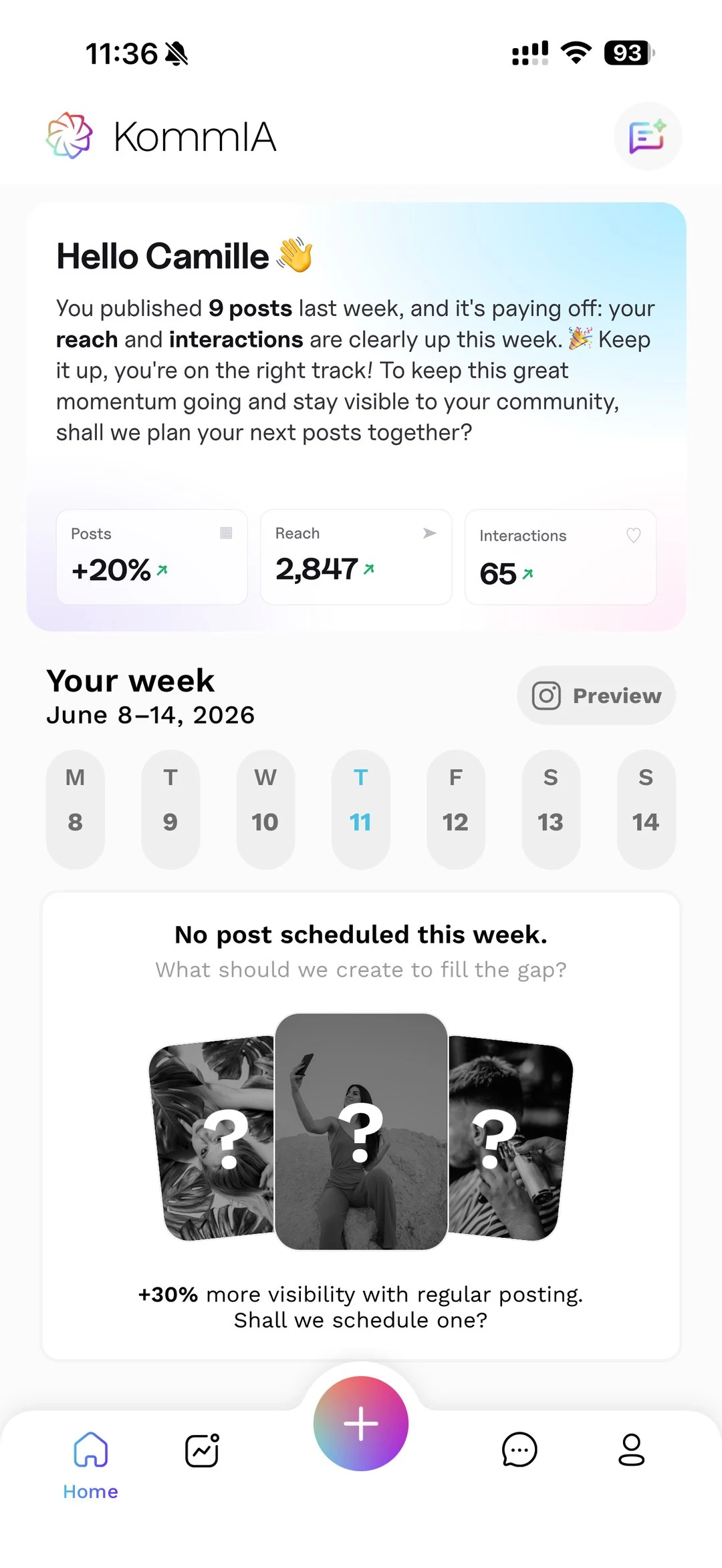
The catch is that doing this manually, every week, for every post, is exactly the kind of repetitive task that eats into the time you could spend on actual work. That is where KommIA's scheduling features come in. KommIA suggests three time slots based on your account's activity, each with its reason, and publishes at the one you pick, so you decide once and move on.
Consistency Beats Perfection
One trap small business owners fall into is waiting for the 'perfect' moment and ending up posting nothing. Publishing regularly, even if the timing is occasionally imperfect, does more for you than holding back. A steady rhythm of well-timed posts beats a rare, perfectly optimised one.
If you are a baker, a yoga teacher or a freelance illustrator, your time is genuinely better spent on your craft than on manually scheduling content. Tools like KommIA's plans are built specifically for this, so you get suggested time slots without the spreadsheet headache. You plan your content once, pick the “when” from the three slots KommIA suggests or set your own, and KommIA publishes for you.
Posting at the right time is not about gaming the algorithm. It is simply about showing up when your audience is actually there.
Start with the window that fits your industry from the list above, check your own Insights regularly to refine it, and let automation handle the rest. Your content deserves to be seen, so make sure it lands when people are actually looking.